ITALY

The local pilots in Reggio Emilia action included three interconnected experiences aimed at strengthening communication, collaboration, sensory exploration, and inquiry-based learning. All pilots were co-designed with external experts and continuously adapted with teachers.

One experience concerns a long-term pathway using cooperative board games supporting the development of communication, problem-solving, and collaboration. Children naturally practiced inclusive strategies, role negotiation, and shared decision-making.

Another experience was done in a multisensory project with the Institute for the Blind that engaged first and second graders in tactile and auditory exploration, leading to the creation of tactile books and a multisensory panel. The strong co-design process, inclusive setting, and shared leadership between teachers and blind educators ensured meaningful participation for all children.

Another experience took place in another location, Domodossola, where the pilot experiences took place in two museums involving eight classes and 22 teachers. Supported by art experts, geologists, and high school students, children explored authentic contexts with autonomy, while teachers observed, experimented with new approaches, and reflected together on epistemological and curricular questions.

CROATIA

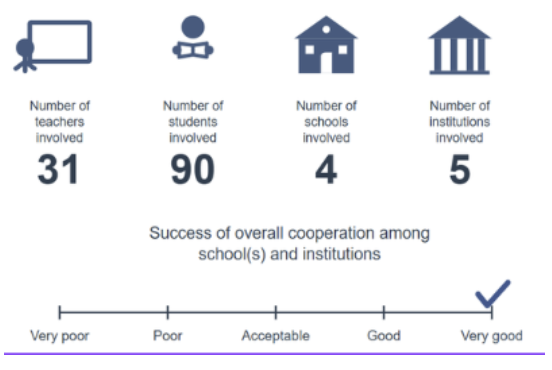
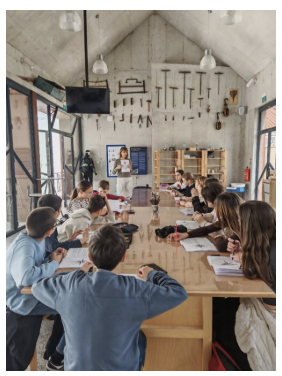
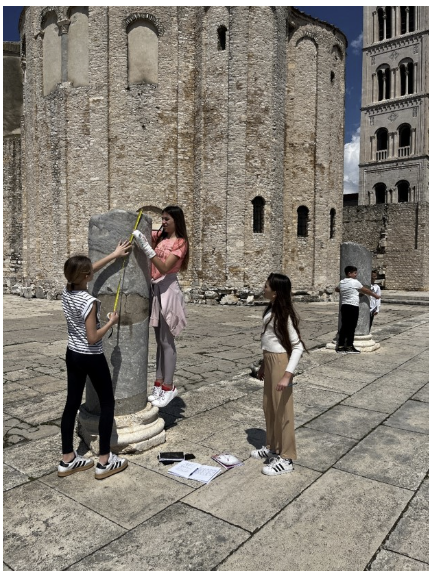
The Widespread School pilot action in Zadar (Croatia) enabled 90 students and 31 teachers from 4 primary schools to engage in field-based learning across 5 local institutions: Nasadi d.o.o., National Museum Zadar, Archaeological Museum Zadar, the International Centre for Underwater Archaeology, and the University of Zadar. 

Activities were coordinated by the City of Zadar, which provided documentation, communication between the stakeholders and the transport for students and teachers. Beyond numbers, the pilot deepened students’ connection to local heritage and fostered experiential learning. Cooperation among stakeholders was rated as very good, with institutions aligning their schedules and resources to support meaningful, curriculum-linked experiences. The initiative laid a strong foundation for sustainable, city-integrated education in years to come.

FINLAND

The pilot actions in Finland tackled different aspects.

Students from 1st and 2nd grade are learning outside in the forest every week. In the pilot action students had a project with the nature center Haltia and recycling center. They explored through the year the local forest and its connections to different materials. 

They also included sustainable development through re-making art from recycled plastic. They learned to compare the natural and artificial environment. Nature center Haltia was our partner in the experience of deepening the outdoor learning experience with experts.

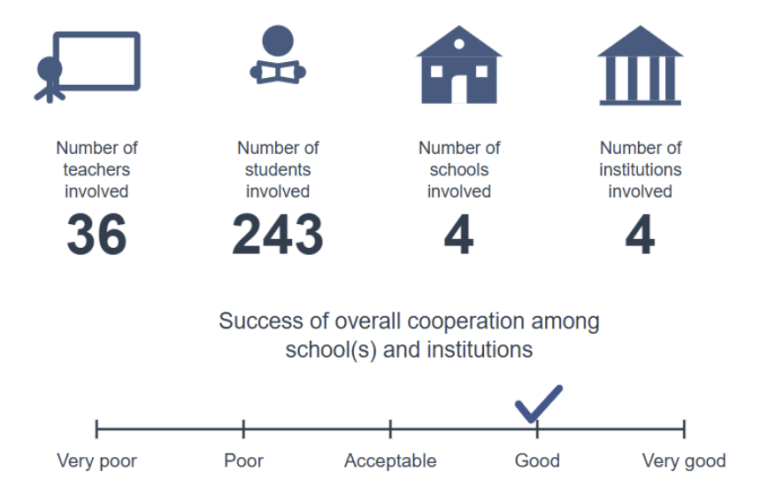
The recycling center offered the expertise in making art and learning from recycling. There were 4 teachers and 75 children involved.

4th graders learned about animals’ natural habitats. The subject was selected by the students. They compared different habitats; a zoo and a farm and the fauna and their characteristics in both environments. There were 30 children and 1 teacher involved. 

Gutsy Go is a one week program for lower secondary level (8th grade). There, the whole age group is attending a one week coaching and in-action process in order to make real action with other people outside the school. Students are choosing the actions and teachers are working as coaches and team leaders. There are 3 schools in Espoo involved in this program. 

SPAIN (CATALUNYA)

The local pilot action in Girona (Spain) was the artistic exhibition developed and inaugurated in collaboration with the Girona City Council and El Bòlit Contemporary Art Center. This exhibition was the culmination of a long process in which two artists worked weekly with students exploring sustainability, environmental issues, and the Ter River through art. Students created sculptures from river waste, water-saving prototypes, rain-invoking music, and symbolic ceramic bowls. The exhibition was co-designed and built by students, teachers, and artists, with students taking active roles in layout, translation, and public presentation. Held during Girona’s “Temps de Flors” festival, the exhibition reached a large audience. Teachers and artists collaborated continuously, and the project involved families, the municipality, and other schools. Beyond numbers, the pilot fostered creativity, environmental awareness, teamwork, and long-term cooperation among educational and cultural stakeholders.